

Traumatic brain injuries can be difficult to recognize after an accident. A person may not have visible wounds yet still experience serious physical, cognitive, and emotional changes. Because symptoms may appear right away or develop over time, prompt medical attention and an understanding of your legal options can be important.
At the Law Office of Carlton J. Moss, Jr. LLC, we help injury victims in Bel Air, Harford County, Baltimore, and surrounding Maryland communities understand the next steps after a serious accident. When another party’s negligence may have caused a brain injury, knowing the warning signs and preserving important information can help protect your health and your potential claim.
What Is a Traumatic Brain Injury?
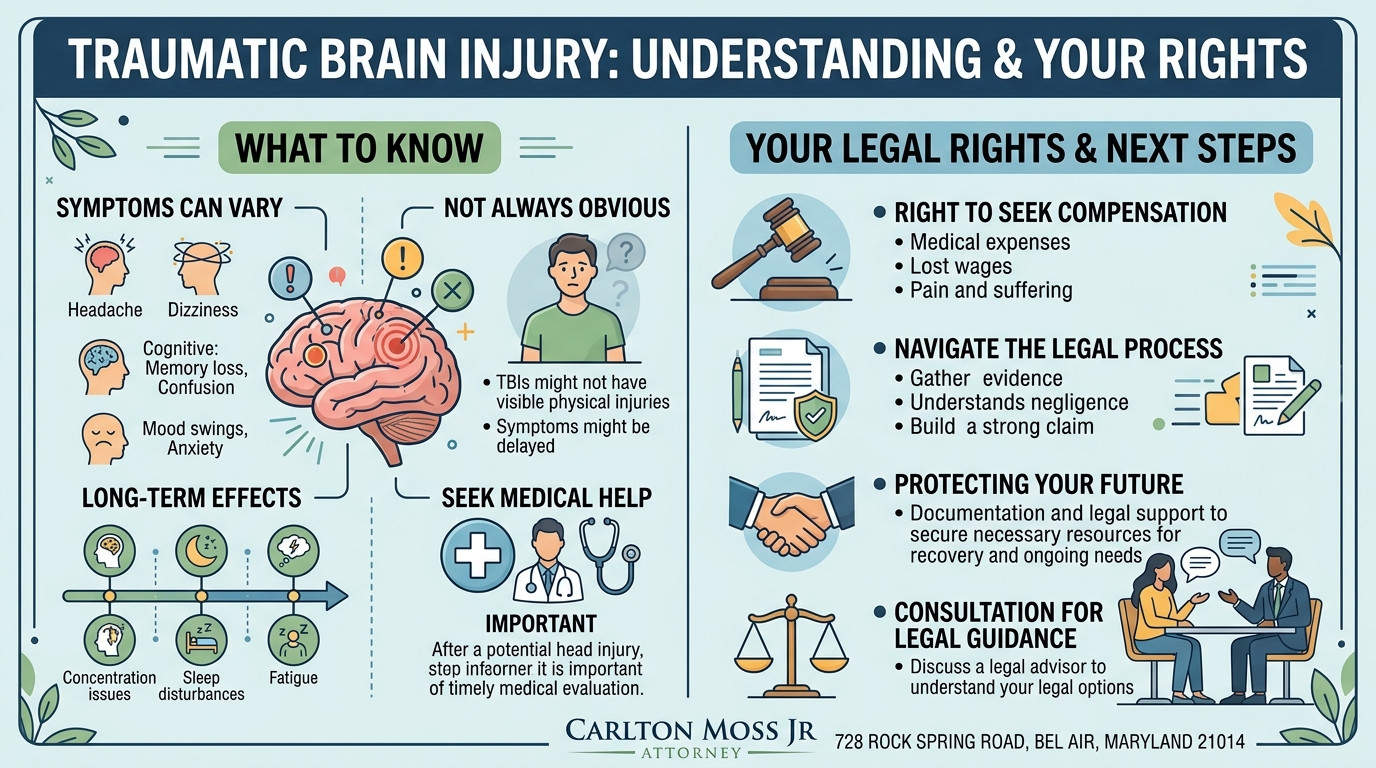
A traumatic brain injury, often called a TBI, occurs when a blow, sudden movement, jolt, or penetrating injury disrupts the brain’s usual function. These injuries can result from many types of incidents, including auto accidents, falls, workplace events, and assaults. The effects may be relatively mild in some cases or may create substantial, life-changing challenges in others.
Brain injuries are sometimes called invisible injuries because their effects are not always obvious to others. Unlike a broken bone or a deep cut, a TBI may not leave visible evidence immediately after an accident. In addition, symptoms may not be apparent on a routine CT scan or MRI.
This does not mean the injury is minor. Someone who initially seems well after a collision or fall may later experience changes in how they feel, think, communicate, or handle everyday responsibilities. Paying close attention to new symptoms in the hours and days following an accident is important.
Signs of a TBI to Take Seriously
A traumatic brain injury can affect many parts of daily life. Some symptoms are physical and easier to notice, while others involve gradual changes in memory, concentration, emotions, or behavior. An injured person and their family may not immediately associate those changes with the accident.
Physical symptoms can include:
- Headaches or dizziness
- Blurred vision
- Sensitivity to light or sound
- Unusual fatigue
Thinking and communication can also be affected. A person may have trouble focusing, remembering information, processing thoughts, speaking at their normal pace, or making sense of what is happening around them. These concerns can be subtle at first, which is one reason brain injuries may be underestimated.
Emotional symptoms may be another indication of a TBI. Irritability, anxiety, mood shifts, and feeling more overwhelmed than usual can follow a brain injury. Without medical guidance, these changes may be mistaken for a separate emotional reaction to a stressful event.
If you believe you or someone close to you suffered a traumatic brain injury, seek medical care as soon as possible. Medical attention can address immediate health needs and create documentation of symptoms as they appear and progress.
How Brain Injuries Happen in Maryland Accidents
TBIs can occur in a wide range of personal injury situations. A crash can cause a driver, passenger, pedestrian, or cyclist’s head to strike an object or move violently even without a direct impact. Auto accidents are a common source of traumatic brain injuries, particularly when the force of the collision causes the brain to move within the skull.
A slip and fall may also result in a brain injury when someone hits their head or is abruptly jolted during the fall. Property owners may be responsible in certain circumstances when hazardous conditions on their premises contributed to the incident.
Work injuries can lead to TBIs as well, especially when a worker falls, is struck by an object, or is involved in an equipment-related incident. In other matters, an injury may stem from medical malpractice or a defective product. The facts surrounding the accident help determine which legal options may apply.
Understanding Your Legal Rights After a TBI
When another person or organization’s negligence contributed to a brain injury, the injured person may have a right to pursue compensation. A personal injury claim against the responsible party may be appropriate after a motor vehicle accident, a dangerous-property incident, or another preventable event.
The available claim depends on how the injury occurred. A defective product or unsafe piece of equipment, for example, could raise a product liability issue. A work-related injury may involve workers’ compensation. In the most devastating situations, surviving family members may need to explore a wrongful death claim.
At Carlton Moss Jr Attorney, we take a hands-on approach to reviewing the circumstances of an injury. A Bel Air attorney can help identify potentially responsible parties, explain the legal process, and assess the options that fit the details of your situation.
What Compensation May Address
The consequences of a traumatic brain injury can last far beyond the first medical appointment. Some people need ongoing neurological care, while others require rehabilitation or support with tasks they once handled independently. The full impact may also affect a person’s ability to continue working.
Depending on the circumstances, a Maryland personal injury claim may seek compensation for current and anticipated medical costs. This may include continued neurological treatment, as well as rehabilitation such as physical, occupational, or cognitive therapy.
A claim may also account for lost income and reduced future earning ability if the injury changes the person’s capacity to work. Pain and suffering can be another consideration, including the emotional effects of the injury and lasting physical or cognitive limitations.
Because a TBI may evolve over time, thorough medical documentation is especially valuable. Healthcare providers can help establish the injury’s extent, track changes in symptoms, and explain how those changes may affect future care needs.
Why Filing Deadlines Matter
There is not an unlimited amount of time to bring a legal claim after a traumatic brain injury. The statute of limitations creates a deadline for filing a personal injury lawsuit. The applicable deadline can depend on the state where the injury occurred and the type of case involved.
Waiting too long may limit or eliminate the ability to pursue a claim. This makes it important to understand the relevant time frame while evidence, medical records, and witness recollections may still be available.
TBI cases can require careful evaluation because symptoms and long-term effects may continue to emerge. Speaking with a Harford County injury lawyer early in the process can help you understand potential deadlines, the evidence that may be relevant, and the steps involved in pursuing a case.
Guidance After a Traumatic Brain Injury
The period after a brain injury can involve difficult medical questions, major changes at home and work, and uncertainty about who may be accountable. Recognizing possible TBI symptoms and obtaining timely medical care are meaningful first steps, especially when symptoms are delayed or not immediately visible.
When negligence may be involved, legal guidance can help you make informed decisions about the path forward. The Law Office of Carlton J. Moss, Jr. LLC provides aggressive legal representation while keeping clients informed and supported throughout the process.
If you or a loved one is coping with a traumatic brain injury after an accident in Bel Air, Harford County, Baltimore, or a surrounding Maryland community, contact Carlton Moss Jr Attorney. We can discuss your concerns about a personal injury claim, possible compensation, and the legal options that may be available.